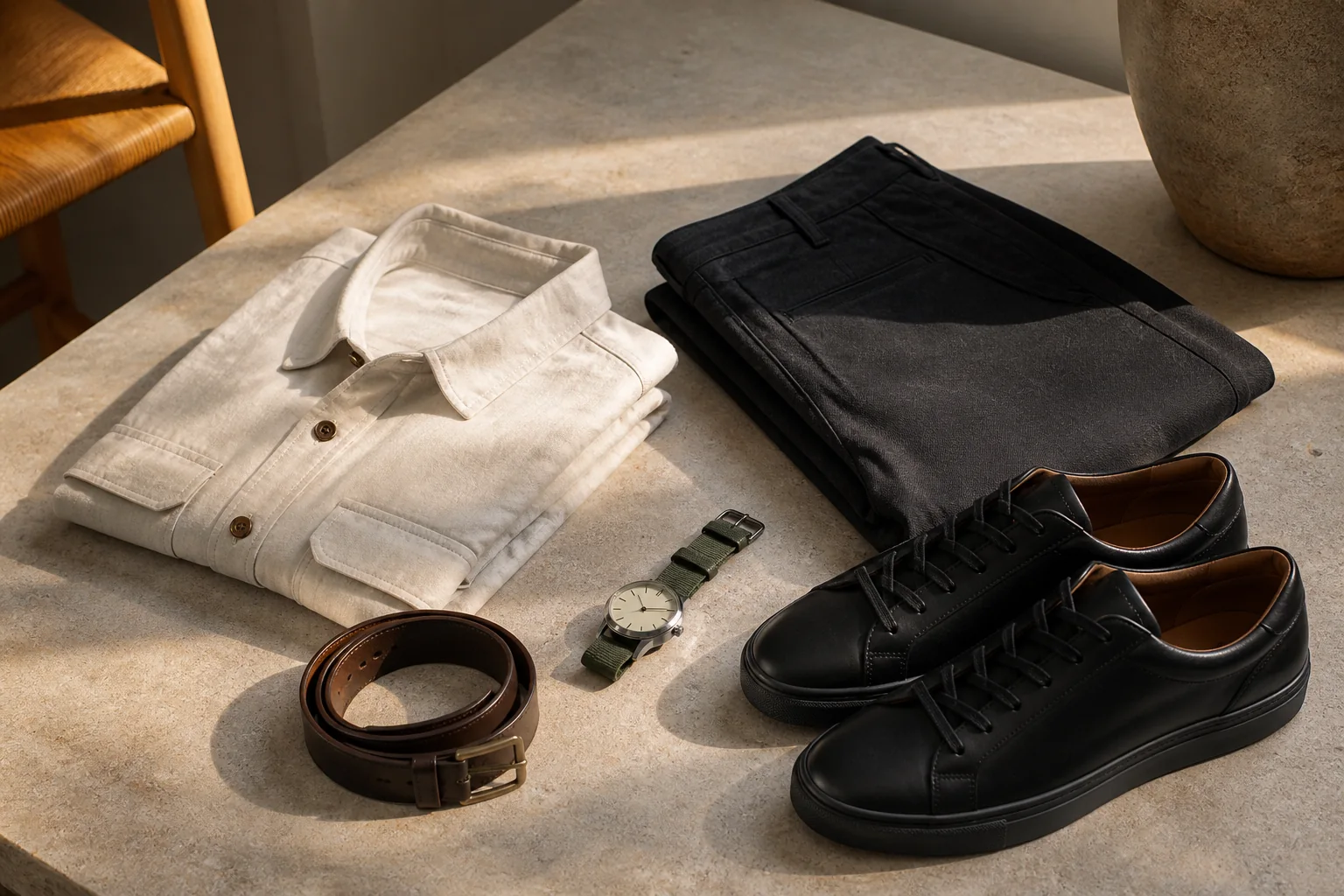
Write down the combinations you reach for without hesitation. Keep the pieces that connect, remove the almost-right ones and buy only to fill a genuine gap.
A uniform is not a costume and it is not an excuse to stop looking. It is a quiet answer to the question of what to wear, built from a few combinations that work harder than they look.
The best version removes friction. It gives you enough consistency to get dressed quickly, with enough room for weather, context and the occasional good impulse.
Start with a point of view
Think about the life your clothes need to support. A week of office days, long walks, dinners, travel and weekends may not need five different wardrobes. It needs a reliable base and a few deliberate changes of pace.
Choose a palette you enjoy seeing together. It might be navy, cream, olive and charcoal. It might be black with one warm colour. The point is not to become monochrome. It is to make more of the wardrobe compatible.
Build around useful pieces
A good everyday wardrobe often has a handful of anchors: one excellent overshirt, trousers that sit properly, a T-shirt that survives more than a few washes, a jacket that handles weather and shoes you can walk in.
Fit and fabric matter more than the number of items. Look for clothes that hold their shape, feel good against the skin and can be worn in more than one setting. The small details do the quiet work: a collar that sits neatly, a hem that does not fight your shoes and a pocket that is actually useful.
Let the repeat work
- Keep a short list. Notice the combinations you reach for without hesitation.
- Remove the almost-right pieces. They make the wardrobe look bigger while making mornings harder.
- Wash and repair properly. Care is part of whether a piece earns its place.
- Add slowly. Buy the missing piece, not the most interesting piece in the shop.
Wearing something often is not a failure of imagination. It is evidence that the thing works. If an outfit makes you feel comfortable, capable and appropriately dressed, let it earn its repeat.
Personal style is often just good decisions made consistently.
The goal is not to dress like someone else. It is to make your own good taste easier to access.