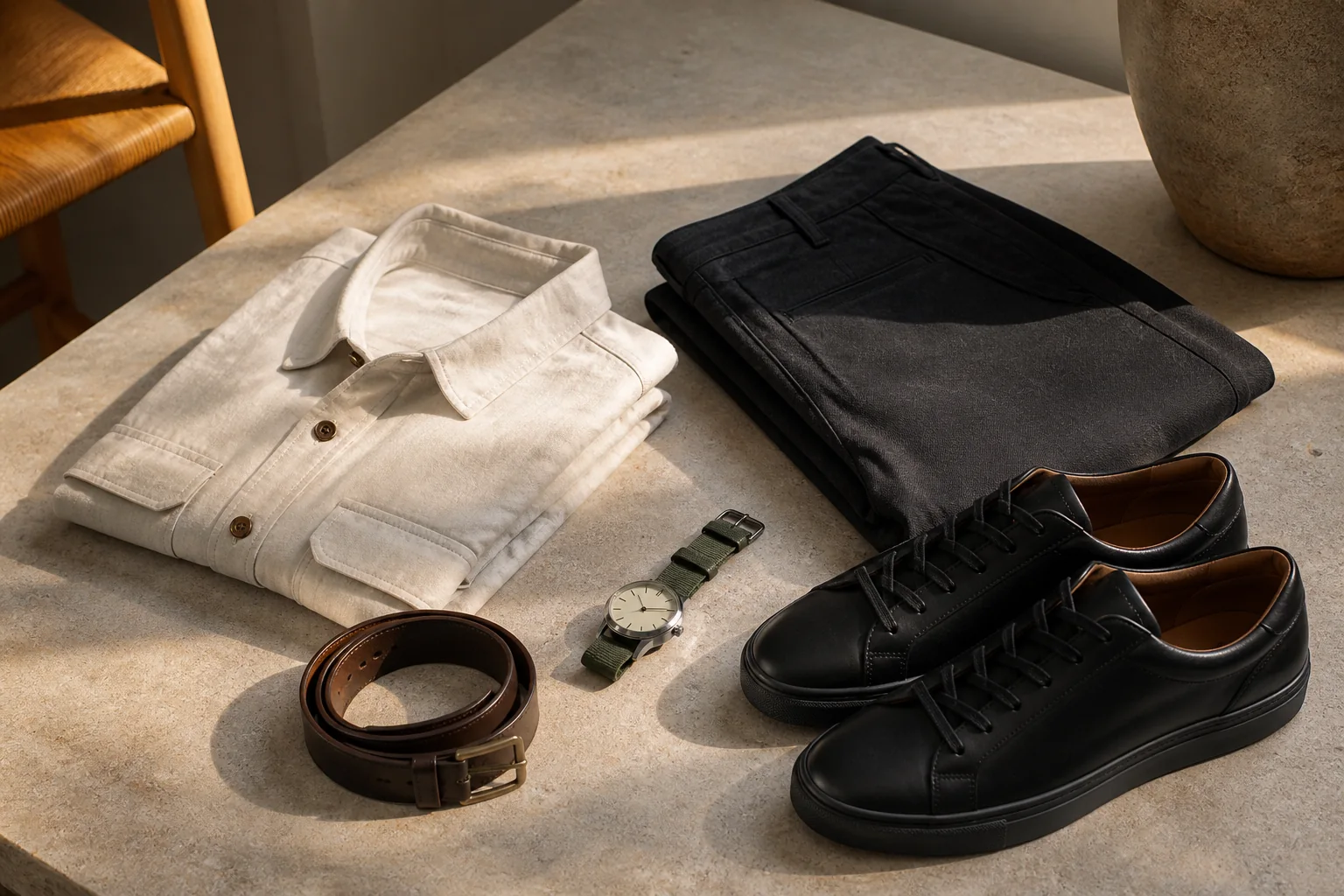
Wear the overshirt with a T-shirt, a shirt and a thin knit this week. If it works across all three, it is doing more than filling a gap in the wardrobe.
The overshirt lives in the awkward space between a shirt and a jacket. That is also where much of ordinary life happens: cool enough for another layer, warm enough to leave the coat at home and too changeable for a decision you want to revisit every hour.
The good ones earn their place because they make several outfits feel finished. They are not precious, but they have enough structure to bring a bit of order to jeans, trousers, trainers and the clothes you already own.
Give it a job
Start with the days you need it for. A heavy cotton overshirt can be a small jacket in autumn, while a lighter wool or brushed style may be better over a shirt in a cool office. Neither is automatically more useful. The right choice depends on the gap it has to fill.
Pockets matter, but only if they stay comfortable when used. Buttons should feel easy to operate. The cuff should roll or fasten without becoming a performance. Good details are the ones you stop noticing after the first wear.
Get the shape right
- Leave room for a layer. It should sit over a T-shirt without looking lost over a shirt.
- Check the shoulder. Too narrow makes the whole garment fight you. Too wide turns a useful layer into borrowed clothing.
- Look at the hem. A clean finish around the hip gives it structure without asking for a tucked-in decision.
- Move your arms. If the back pulls when you reach for a train handle, you will not wear it on travel days.
Let it crossover
Wear it open with a plain tee, buttoned over a shirt or under a coat when the temperature drops. Try it with the trousers you normally reserve for smarter days. The useful test is not whether it looks good in a single photograph. It is whether it makes Tuesday morning and Saturday afternoon easier.
The trade-off is bulk. A sturdy overshirt will not disappear into a small bag, and a soft one may not handle a wet walk. Know which compromise you are buying. One honest layer is better than three almost-right ones.
A good layer should give the rest of the outfit somewhere to go.
Buy the gap, check the fit and wear it until the fabric starts to tell you what it is for.