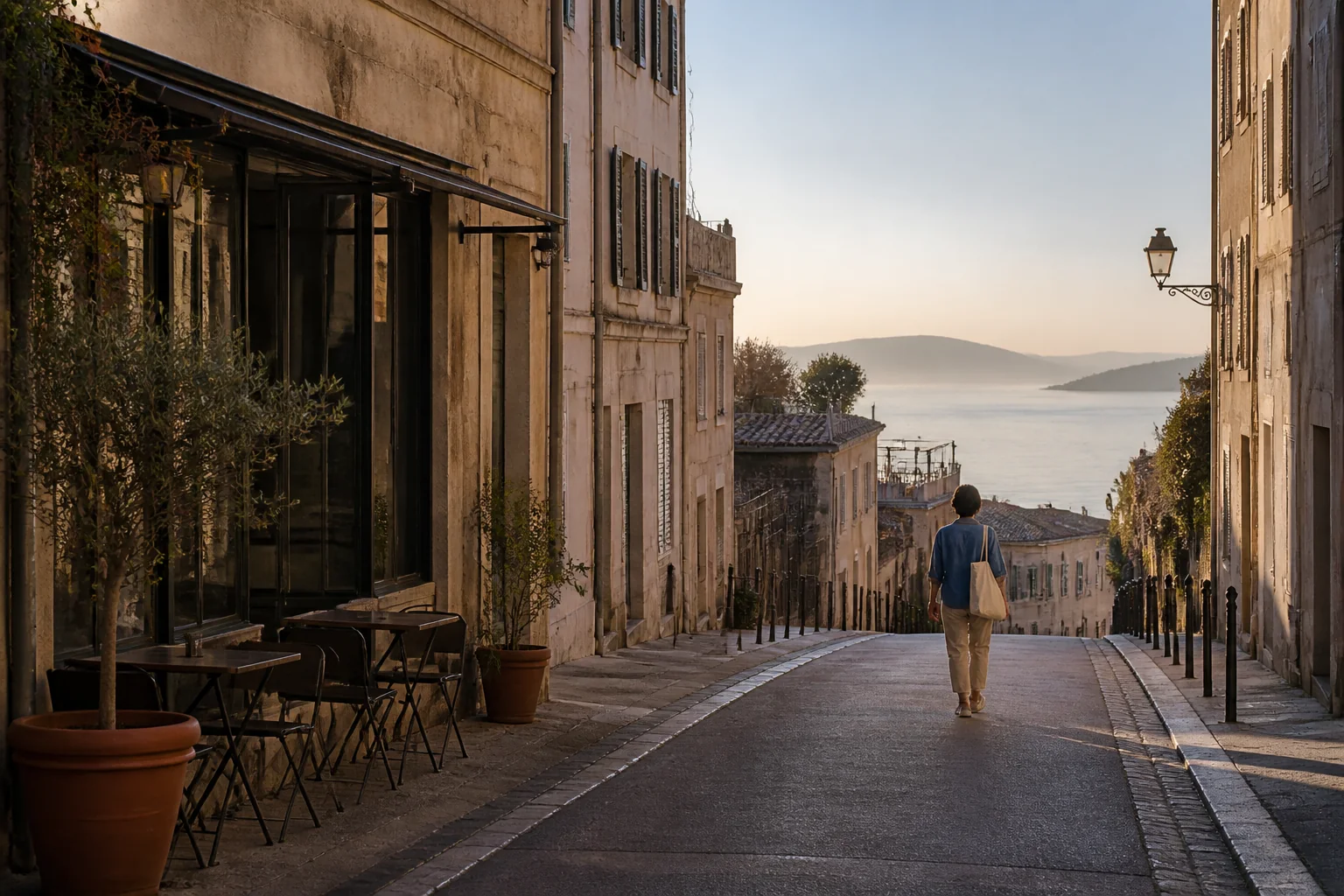
Choose a station, a place for supper and one street or park you want to pass through. Let everything between them stay available.
A train gives a day trip a useful beginning. You step off somewhere different without spending the first hour finding a car park, then the city is already asking what you will notice next.
The best walking days do not start with a list of ten places. They start with a direction and a reason to keep going.
Make arrival count
Do not rush straight to the headline attraction. Walk away from the station for ten minutes before checking the map. The first streets often tell you more about a place than the square that appears on every guide.
Have a loose sense of north, the water or the old town. That is enough orientation for the first stretch. If you need coffee, find it on the way rather than treating it as another appointment.
Keep the middle open
- Pick one proper stop. A gallery, market, bookshop or view gives the day a centre.
- Choose a neighbourhood. Let the walk pass through somewhere people actually live, not just the places built for visitors.
- Carry a layer and water. The route will probably be longer once it starts going well.
- Check the last train early. A little practical knowledge keeps the afternoon relaxed.
Finish somewhere good
Supper works best when it is part of the route home, not a desperate search after everything else has closed. Choose a place before you leave, check the basics and keep one alternative nearby.
The trade-off is that a loose day can be less efficient. You will miss a thing or take the wrong turn. That is the price of leaving room for a place to be itself.
A good city day has a beginning, a finish and some unclaimed space between them.
Start at the station, walk towards one good thing and let the rest of the day meet you halfway.