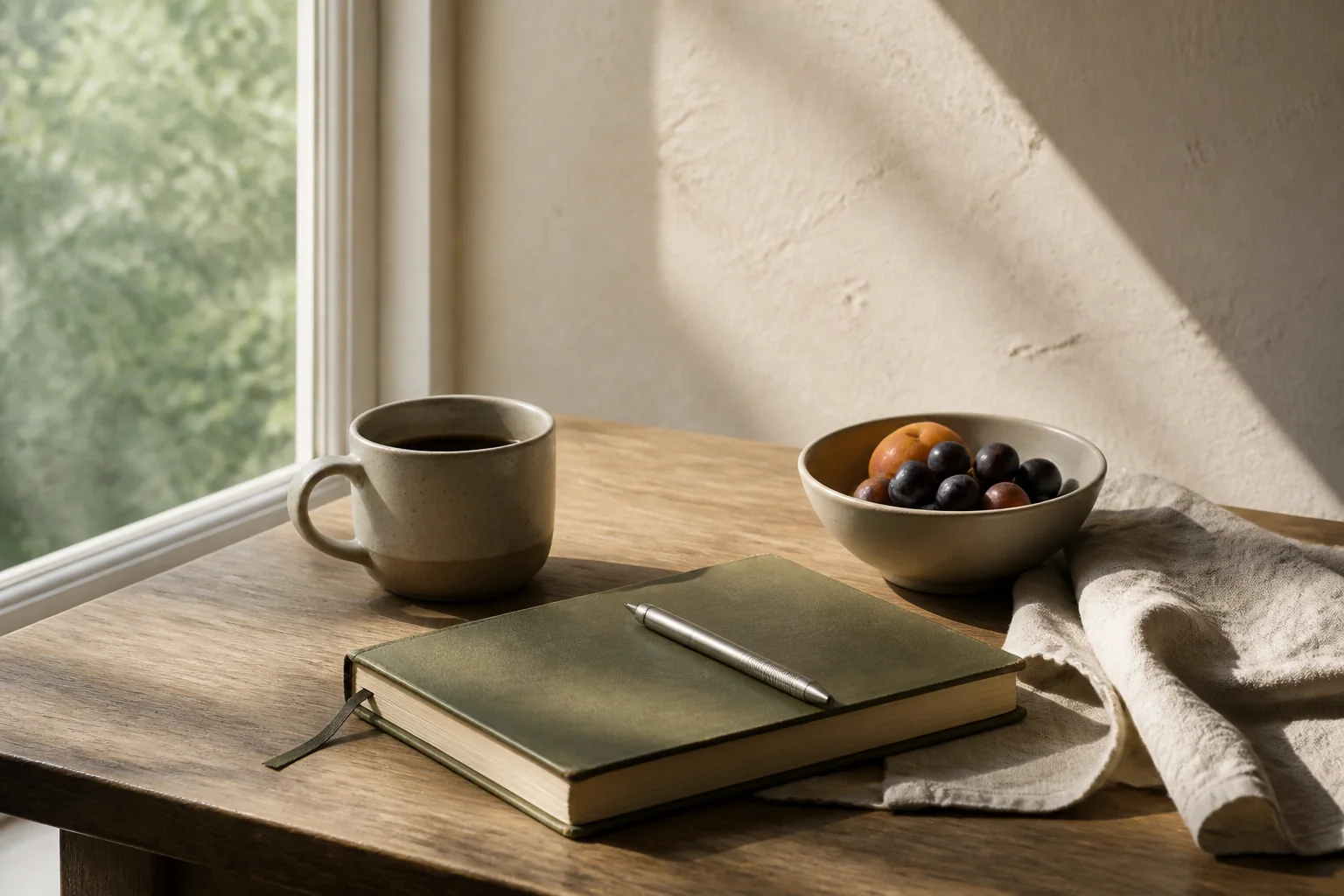
Choose one hour this week and protect it from errands, scrolling and the pressure to be productive. Decide what it is for only when it begins.
An empty hour can feel wasteful when the week is full. There is always a message to answer, a cupboard to organise or a useful thing you could do with the time.
But not every part of the week needs to justify itself. A little space lets you notice what you actually want, which is harder to hear when every minute has already been assigned.
Make the space
Choose a real place in the calendar. Early on a Saturday, after work on a Friday or somewhere in the middle of a Sunday can all work. Tell the people who need to know, but do not announce it like a new regime.
Put the obvious chores somewhere else if you can. The hour will be easier to keep when it is not sitting directly beside the laundry, the inbox or a half-finished job.
Use fewer rules
- Leave the phone at a distance. You can still answer something important. You do not need every interruption on the table.
- Start with a drink. Tea, coffee or water gives the hour a gentle beginning without filling it.
- Follow the first honest impulse. Read, walk, cook, sit outside or do the thing you keep postponing for no good reason.
- Stop before it becomes a project. The hour does not need an outcome to have been well spent.
Let the hour return
Sometimes the unplanned hour will turn into a walk. Sometimes it will be a nap, a long shower or twenty minutes looking out of the window. Do not judge the form too quickly. Rest rarely looks impressive from the outside.
The trade-off is that something else may remain undone. That is not a flaw in the hour. It is the reminder that a life cannot be made entirely from completed tasks.
Leave one part of the week open enough to hear yourself think.
Protect the hour, keep the rules light and let it be useful in whatever way the day needs.