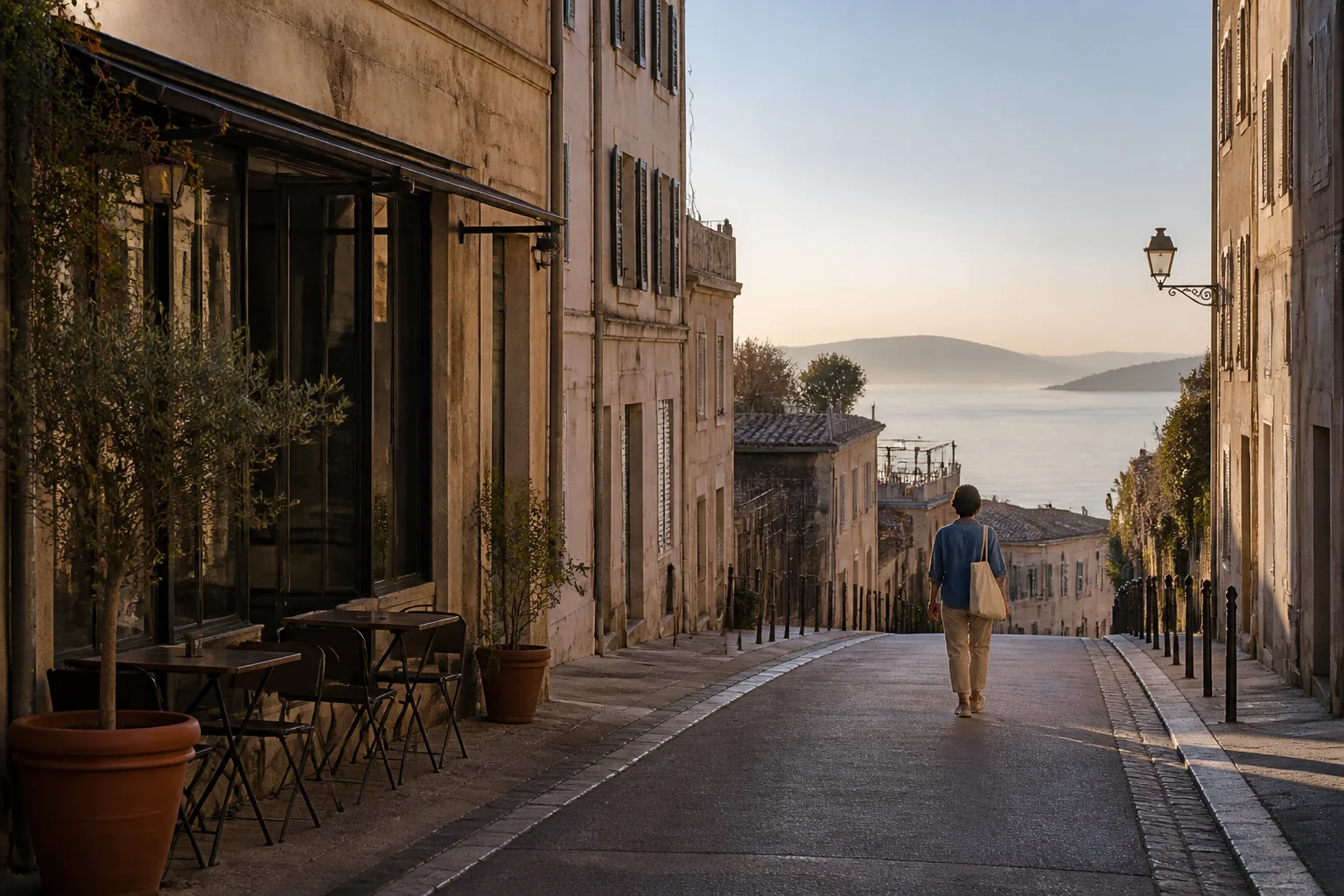
Choose one anchor for the day, walk towards it and leave the route around it deliberately loose enough for one good surprise.
The most memorable part of a short trip is often the bit between the places you meant to visit. A side street, a bakery you did not research, a view that appears because you took the long way round.
Walking changes the scale of a city. It gives you time to notice the texture of a neighbourhood, the way a place starts its morning and the small signals that do not make it into a guidebook.
Why walk without a checklist?
A list is useful when time is tight, but it can turn a city into a sequence of tasks. Walking offers a different kind of progress. You cover ground, but you also leave space for the day to become its own thing.
It helps to choose one fixed point each day: a museum, a market, a restaurant or a stretch of coast. Everything between that point and where you are staying can stay open.
Build a loose route
- Start with a direction. Pick the water, the old town, the park or the high ground.
- Keep one anchor. Give the day a destination worth walking towards.
- Take one unplanned turn. If it looks interesting, follow it for ten minutes before checking the map.
- Stop before you need to. A good coffee or a bench at the right moment is part of the route.
You do not need to be careless with time. You can still book the important things and know how to get home. The trick is to protect a little unclaimed space around them.
Carry less, notice more
Comfort makes wandering easier. Wear shoes you trust, bring a light layer and keep water, a small notebook and a portable battery close. The ideal bag is the one you stop thinking about after ten minutes.
Put your phone away for a stretch of the walk. Not forever, just long enough to let your attention settle on the street in front of you.
Leave the timetable with enough room for a good surprise.
The best short trips do not feel crammed. They feel like a small change in your pace.